Everything fits
the handle in your hand.
The mandrel is the handle, dowel or core you are building on. All three tools share it, so a finished handle diameter goes straight from the whip tool into the knot tool without you writing it on the back of something.
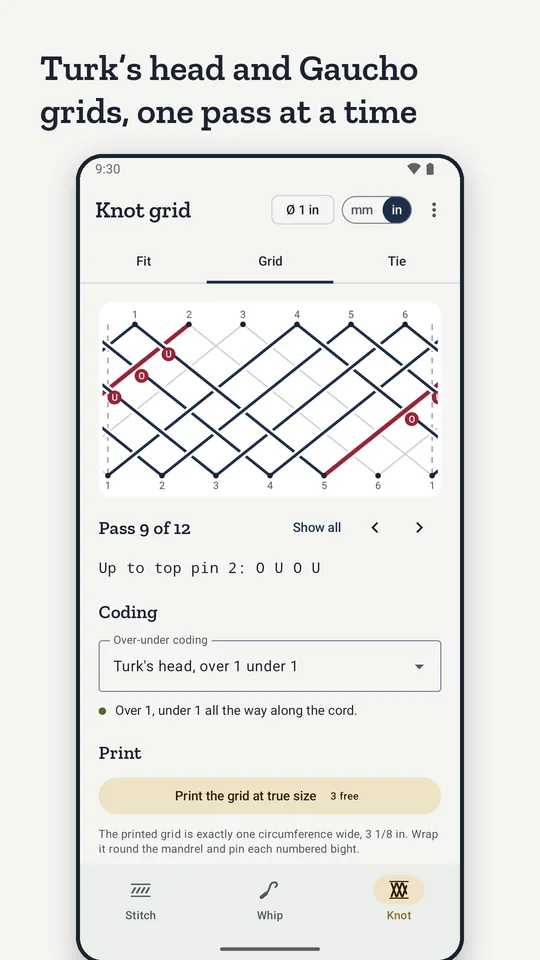
Knots by leads and bights
A knot that does not fit the handle is a knot you untie. The grid works out the length that actually fills your mandrel, and then walks you through it one pass at a time.
Fitted to the mandrel
The knot length that fills the handle you entered, with coverage, strand angle and the cord to cut. Over-under coding by row, which makes Gaucho rings round the knot, by column, which makes herringbone along it, or hand-edited.
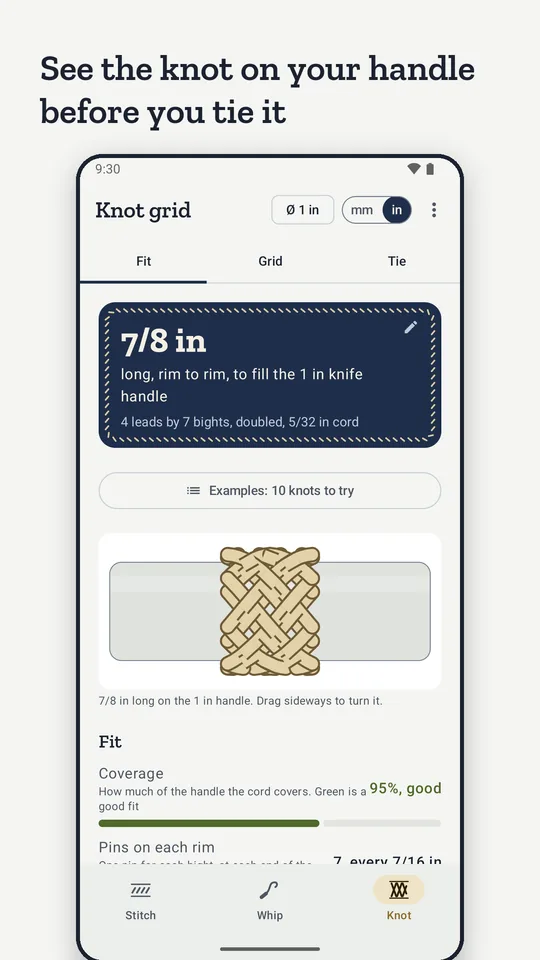
Tying with both hands full
One pass at a time in large type with big over/under tokens and the pass highlighted on the grid. Tap anywhere, or click a page-turner. It reads each step aloud and remembers where you stopped.
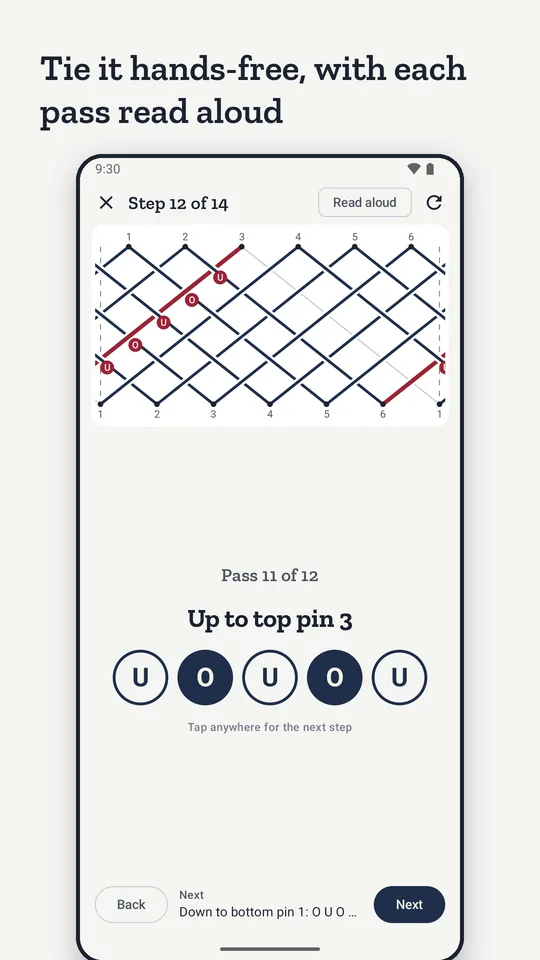
Leather math, printed to work from
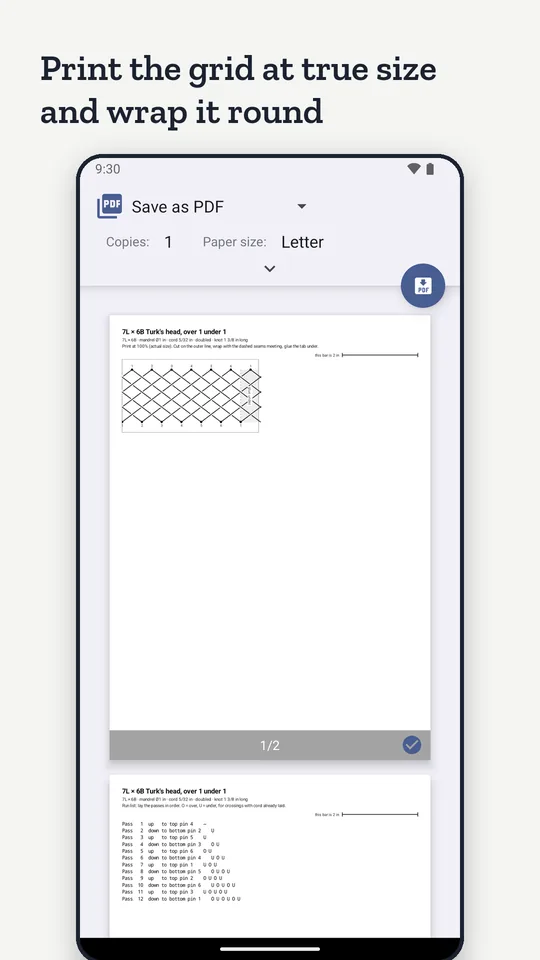
The point of a hole layout is to tape it to the piece and prick through it. That only works if it comes out of the printer at exactly the right size.
Stitch math
Pricking iron spacing in mm or SPI, a layout that lands a hole on every corner, how to walk a multi-prong iron along each side, saddle-stitch thread length, and the cut width for a leather wrap.
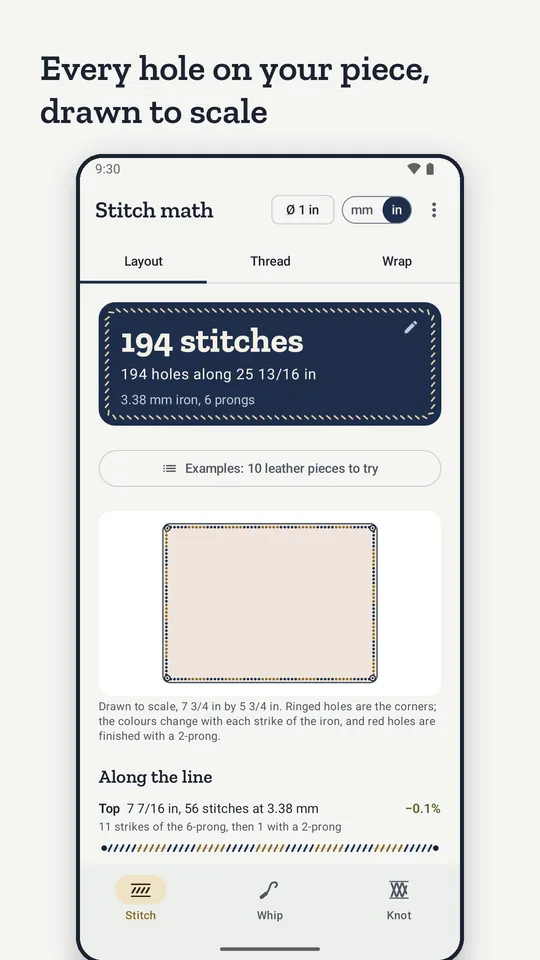
Printed full size
A rectangle prints whole, tiled across sheets when it is bigger than one, and custom segments print as strips that join end to end. A knot grid prints one circumference wide, to wrap round the mandrel.
How a piece goes
Set the mandrel
Enter the handle, dowel or core everything is being fitted to.
Work out the numbers
Stitch spacing and thread, strand drops along a whip, or a knot by leads and bights — from scratch or from one of forty worked examples.
Print or share
At true size to prick through or wrap round, or as plain text for a notebook.
Tie it hands-free
One pass at a time in large type, advanced by tap or page-turner, read aloud.
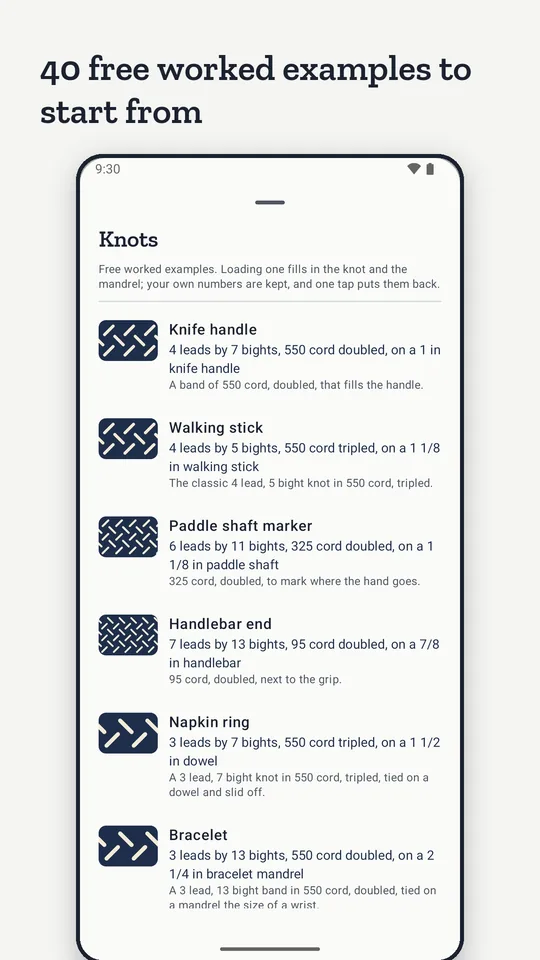
Somewhere to start
A knife handle, a walking stick, a paddle shaft, a bracelet mandrel: forty worked examples that load real numbers into a tool, with your own kept and one tap to put them back.
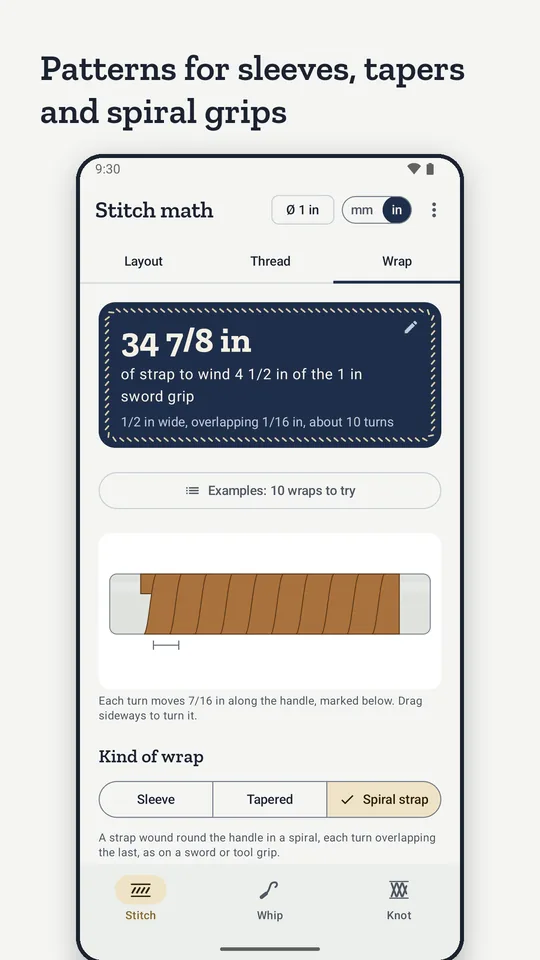
Wrapping a handle
How much strap to wind round a grip, how far each turn moves along it, and how much it overlaps — as a sleeve, a taper or a spiral, with the piece drawn as it will sit on the handle.
Free, with Pro
The calculators, grids, run lists and cut lists are free, and so is sharing them. Pro is a one-time purchase, with the first few uses of each Pro feature free so you can try them on a real piece.
| Price | $6.99 one-time |
| Pro unlocks | Hands-free tying · printing at true size · sharing without the “Made with Mandrel Bench” line |
| Free first | The first three print jobs and the first three knots tied hands-free |
| Always free | All three tools, every calculation, the forty worked examples, the run lists and the cut lists |
The details
| Tools | Stitch math, with layout, thread and wrap · whip taper · Turk's head and Gaucho knot grid |
| Knot coding | Row coding makes Gaucho rings round the knot; column coding makes herringbone along it. Named the way the sources do, since 1.0.9. |
| Units | Inches read like a ruler: sixteenths, or thirty-seconds under half an inch, so 550 paracord shows as 5/32 in. Fields take decimals or fractions and show the ruler reading in the field itself: a clean fraction stays as the fraction, and anything else reads as “0.1575 ≈ 5/32 in”. |
| Whip taper | Strand drops for leather lace or paracord, lace width or cord coverage along the thong, a taper chart, and the cut list. A finished layer becomes the core of the next in one tap. |
| Honest defaults | Until a tool's numbers are changed, its answers say plainly that they come from example numbers |
| Platform | Android · com.jdcapone.mandrelworkshop · works offline, with no internet permission |
| Status | 1.0.9, in closed testing on Google Play |