Tonight's Moon,
on your desk.
Lunaria shows the Moon that is in the sky right now. The phase is tonight's true phase. The face rocks and nods with the Moon's real libration. The dark limb glows with earthshine. And the disc grows and shrinks as the Moon truly nears and recedes. Every frame is computed on the device, from reality.
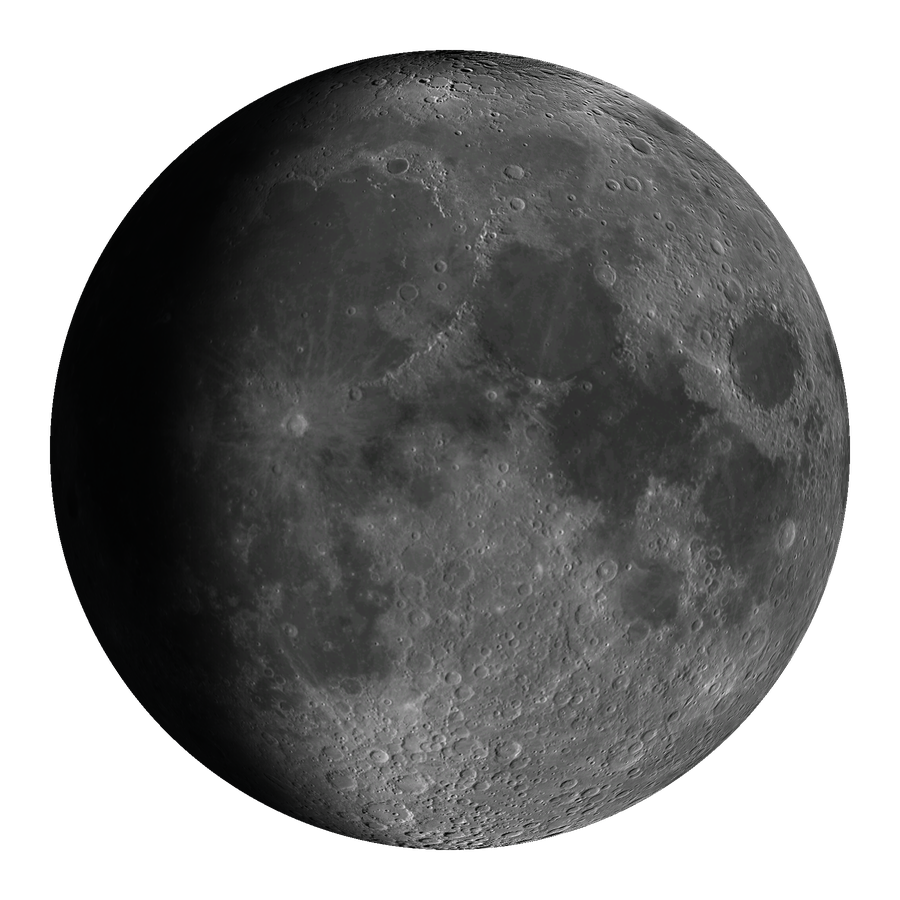
Lit exactly as it is tonight
Lunaria shows the Moon that is actually in the sky right now: the terminator falls exactly where the Sun is lighting the real Moon, checked against NASA's JPL Horizons to a twentieth of a degree. Watch it in real time, or run a gentle time-lapse and see a whole month of phases pass in minutes.

Tonight's true terminator
The lit and shadowed halves are placed astronomically: the same soft twilight line that rakes across the real Moon's craters, computed for this date and time. A first-quarter Moon shows its mountains in dramatic relief, exactly as it does through a telescope tonight.
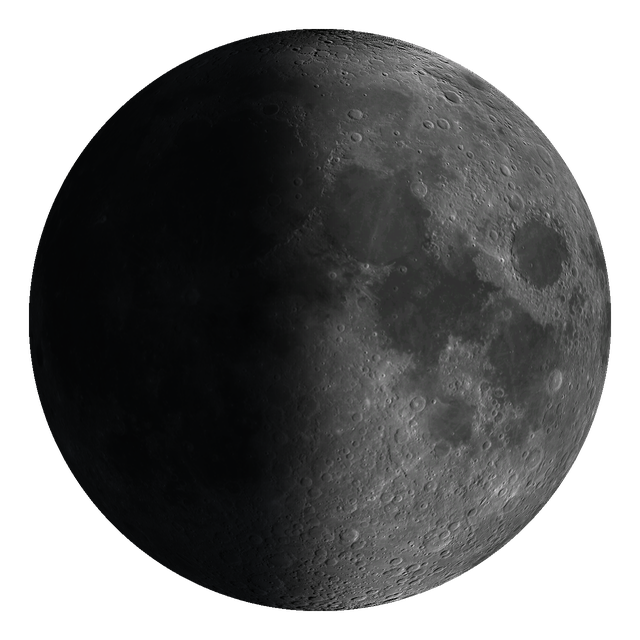
The whole face, correct
Mare Imbrium, Copernicus, Tycho's rays: the near side is a real NASA Lunar Reconnaissance Orbiter mosaic, lit precisely as much as the Moon is lit tonight. The real surface, photographed from lunar orbit.
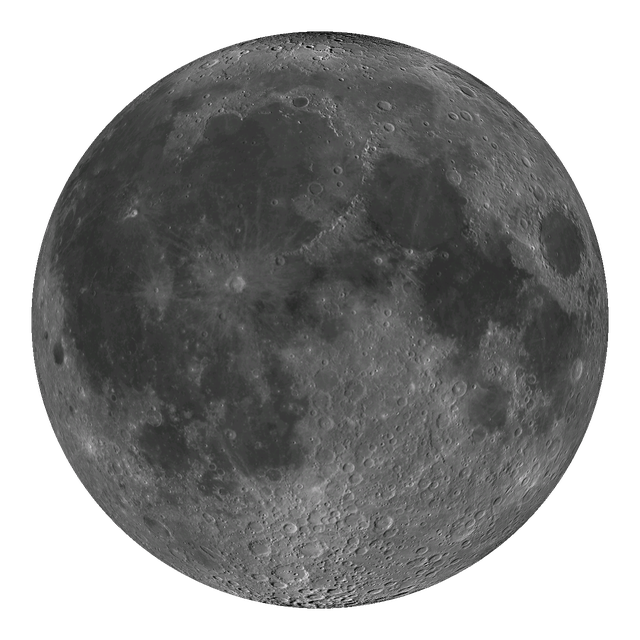
The Moon's real wobble
The Moon shows us a shifting face. It rocks side to side and nods up and down: libration, so that over a month you actually see about 59% of its surface, and the near-side features visibly shift. Lunaria reproduces it, because it computes the Moon's real orientation. Two full moons, weeks apart, tilted the way the real Moon tilts:
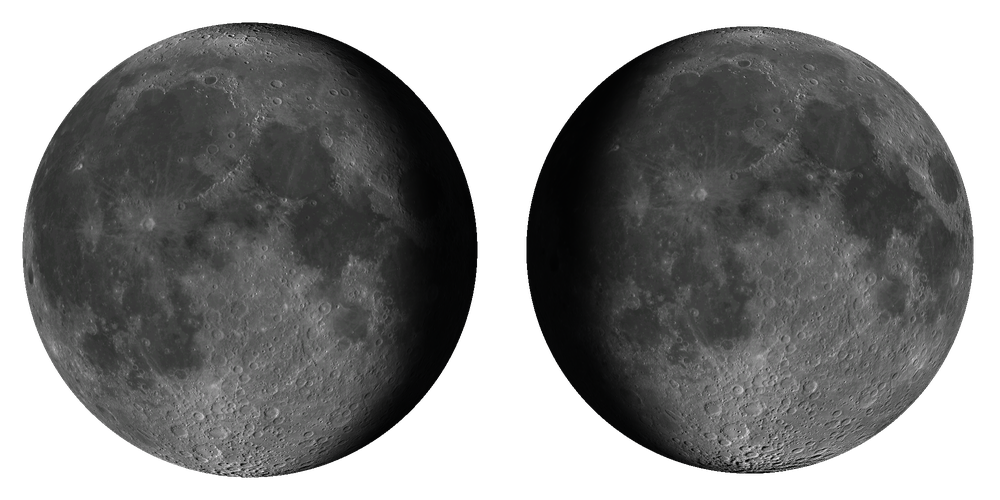
The old Moon in the new Moon's arms
A glow you can just make out
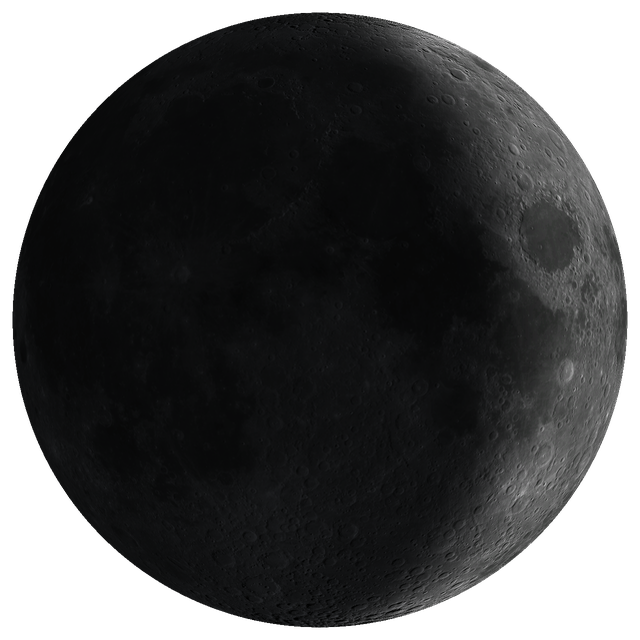
The unlit part of the Moon still carries a faint glow, lit by sunlight bouncing off the Earth. It's strongest around the new Moon, when the Earth, seen from the Moon, is nearly "full." Lunaria renders that ashen glow at its real strength: a cool, ghostly whole-disc you can just make out behind the bright crescent.
Turn it off for a pure crescent, or leave it on for the sight that has stirred skywatchers for millennia, first explained by Leonardo.
Supermoon, for real
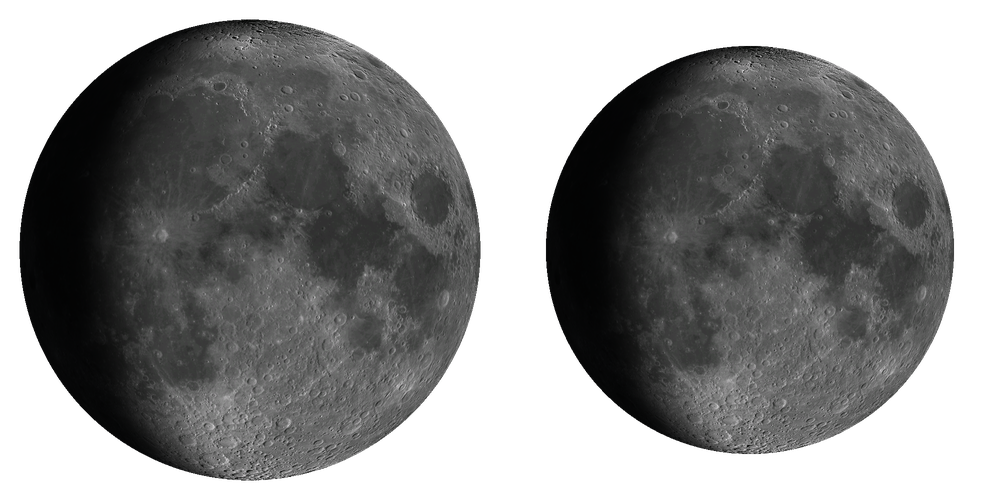
The Moon's orbit is an ellipse, so its distance, and with it its size in the sky, changes all month. At perigee it's about 14% wider than at apogee. Lunaria's disc breathes with the true distance, so a supermoon actually looks like one. Same phase, the real nearest versus farthest of the month:
The Moon of a night that mattered
Set Lunaria to a date that means something: the night you were born, a wedding, an anniversary, and it freezes on the Moon exactly as it looked that evening: the phase, the wobble, the size, with an optional engraved line beneath it. A keepsake that is astronomically true. And because all the math is on the device, a saved Moment works entirely offline; it will show that night's Moon forever, wherever it's plugged in.
Live, tonight
Out of the box it shows the real Moon, right now, and keeps up with the sky on its own, dimming after your local sunset if you like.
Or a Moment
In the settings page, switch to Moment mode, pick a date and time, and add a short label. Lunaria travels to that night's Moon and stays there.
Back anytime
Flip back to Live whenever you want. The keepsake date is remembered, one tap away: a gift that keeps its meaning.
Two minutes to the Moon
Plug it in
USB-C, any phone charger. Lunaria wakes and opens its own Lunaria-Setup WiFi hotspot.
Tell it your WiFi
Join the hotspot with your phone; a setup page appears. Enter your network (home, and school & work 802.1X networks too).
It runs itself
WiFi is used only for the clock and your timezone. From then on the Moon is computed on the device itself.
Instrument specifications
| Display | 1.75″ round AMOLED, 466 × 466; deep blacks, made for the night sky |
| Processor | Espressif ESP32-S3, dual-core 240 MHz · 8 MB PSRAM · 16 MB flash |
| The Moon | NASA LRO WAC global mosaic (public domain) · full-disc, per-pixel spherical render with true libration and apparent size |
| Astronomy | Phase, libration, distance & sub-solar point computed on-device; validated against JPL Horizons: libration within 0.2°, distance within 0.3% |
| Modes | Live (real time or gentle time-lapse) · Moment keepsake (any date 1900–2099) · optional Moon-info card (illumination, moonrise & set) |
| Data | Internet time & geojs.io location for your timezone and sunset; keyless and open. The Moon itself is computed on the device, network or not. |
| Connectivity | WiFi 2.4 GHz · WPA2 Personal and Enterprise (802.1X); remembers 3 networks |
| Controls | Web settings page on your network · auto-dim after local sunset (on by default) · power-cycle 3× to reopen setup |
| Power | USB-C, 5 V; runs whenever it's plugged in |
| Privacy | Settings live on the device; setup happens on your own network |